Encryption vs Decryption: What is the Main Difference?
Summary
Did you realize that encryption has existed for a very long time?
Introduction
Did you realize that encryption has existed for a very long time?
Hieroglyphs, symbols that symbolize words and sounds, were used as encryption by the ancient Egyptians to safeguard their secret communications.
Encryption is more crucial than ever in the digital era because it helps prevent unauthorized parties from accessing sensitive data. But how do encryption and decryption differ from one another and complement one another to safeguard our data?
This blog article will discuss the main distinctions between encryption and decryption and how they are applied in cybersecurity.
Encryption vs Decryption: Definition and Overview
Encryption vs. Decryption: Overview and Definition.
Encryption and decryption are two of the most important concepts in cyber security. Encryption refers to transforming plain text data into an unreadable format, usually ciphertext. Decryption is the opposite process that takes encrypted data and converts it back into its original form or plain text.
The use of encryption has grown exponentially in recent years as more businesses move their operations online and rely on digital communications for day-to-day activities. According to a 2021 survey by Gemalto, 35% of organizations have implemented some form of encryption technology to protect their sensitive information from malicious actors.
As cyber threats continue to evolve, companies must use strong encryption techniques that can withstand even sophisticated attacks. At the same time, there is increasing concern about government surveillance programs, which allow agencies access to encrypted data without user consent or knowledge.
In addition, many governments worldwide have imposed laws requiring companies operating within their jurisdictions to grant access to encrypted data upon request – a practice known as “backdooring,” which critics argue undermines privacy and security measures designed specifically for protecting users’ personal information against unauthorized access or misuse.
Understanding the difference between encryption and decryption is essential for organizations of any size seeking to protect their data.
What are The Similarities Between Encryption vs Decryption?
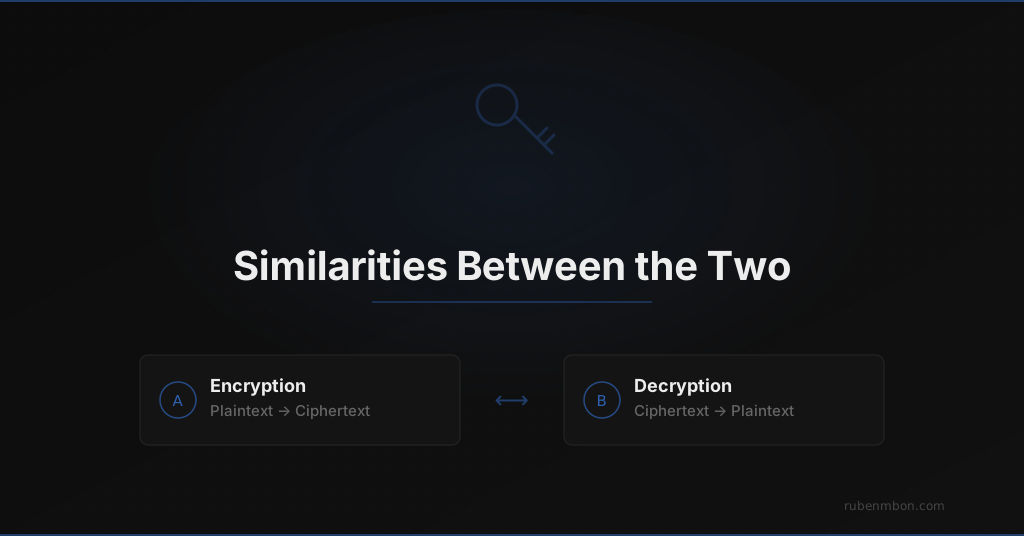 Main Similarities Between Encryption and Decryption.
Before we understand the differences between both, it is important to know the similarities. Here’s a quick look at the common characteristics between encryption and decryption:
-
Both are used to protect data from unauthorized access or misuse: During encryption, data is transformed into ciphertext and can only be accessed by those with the correct encryption key. Decryption is the process of decrypting this ciphertext back into its original form.
-
Both use cryptographic algorithms to process information: To create the encrypted ciphertext, encryption algorithms scramble data in a way that makes it unreadable and unbreakable. Decryption algorithms are used to unscramble the ciphertext back into its original form.
What’s the Main Difference Between Encryption vs Decryption?
 Main Difference Between Encryption and Decryption.
The main difference between encryption and decryption lies in transforming plain text data into an unreadable format. Encryption involves taking a plain text message or file, applying a mathematical algorithm (known as a cipher) to it, and producing a ciphertext. To decrypt the data, you must have access to the original algorithm and its accompanying key.
Decryption then simply reverses this algorithm to restore the original plain text message or file. It’s important to note that encryption and decryption can be done manually (pen and paper) or digitally with a computer.
Here’s the list of differences between encryption and decryption.
-
Process: Encryption refers to transforming plain text into an unreadable format, while decryption is the opposite process of converting encrypted data back into its original form. For example, if you encrypt a file, then to decrypt it, you must use the same algorithm and key.
-
Security: Encryption adds a layer of security by scrambling data, so it’s unreadable without the correct key. Decryption does not provide security; instead, it restores the original plain text message or file.
-
Privacy: Encryption helps protect user privacy by making it harder for hackers or malicious actors to access sensitive information. Decryption, however, can expose that same data if done incorrectly or with an unauthorized key.
-
Legality: In some countries, encryption is regulated by law, and companies must provide access to encrypted data upon request. Decryption is not always legally mandated and can be done at the user’s discretion.
-
Uses: Encryption is primarily used to secure data in transit or at rest, while decryption makes that data readable again.
-
Key Length Strength: Encryption relies on the length of the secret key used to be secure, while decryption does not.
In short, encryption is a process for making data unreadable, while decryption is the reverse process that makes encrypted data readable again.
Types of Encryption
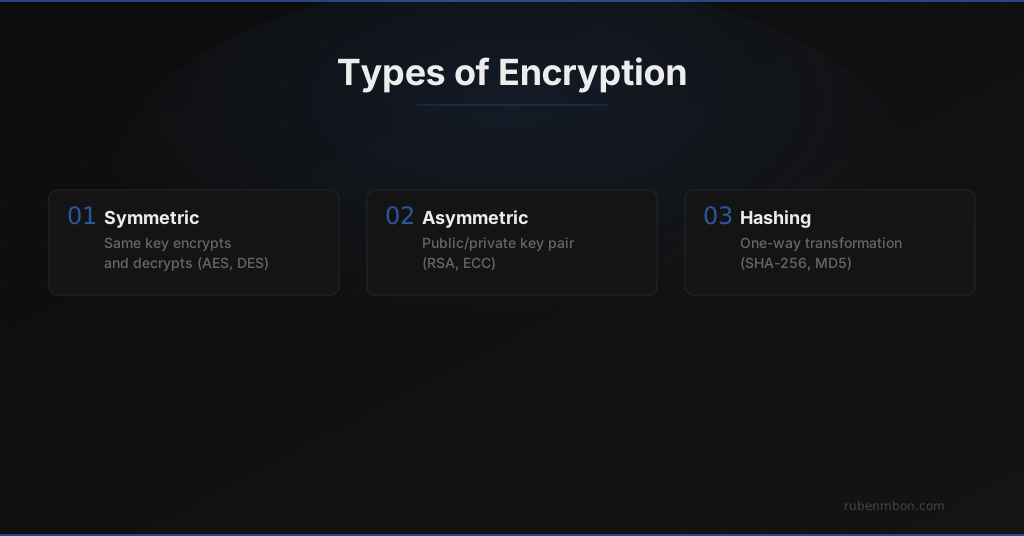 Five Types of Encryption.
Various encryption techniques are used to scramble or encode data into a form that can only be accessed by someone with the right decryption key. Typical forms of encryption include:
-
Symmetric encryption: a symmetric key employs a single key for both encryption and decryption. The key, shared by the message’s sender and recipient, must be kept a secret to maintain the communication’s security. AES (Advanced Encryption Standard) and DES (Data Encryption Standard) are examples of symmetric key encryption algorithms.
-
Asymmetric key encryption: it uses two different keys—a public key and a private key—for encryption and decryption. The message is encrypted using the public key and decrypted using the private key. Because the private key is not shared, it is more difficult for unauthorized parties to decrypt the message with asymmetric encryption than with symmetric encryption. Asymmetric key encryption algorithms like RSA (Rivest-Shamir-Adleman) and ECC are just two examples (Elliptic Curve Cryptography).
-
Password-based encryption: This kind of encryption locks data with a password. The password serves as the encryption key for the data, and only when it is entered correctly can the data be decrypted. Encrypting data using a password to protect sensitive documents and online accounts is standard practice.
-
Encryption with key escrow: With this method of encryption, a duplicate of the encryption key is kept in a safe place, or “escrow,” in case it becomes necessary to decrypt the data. When the original encryption key is lost or forgotten, key escrow encryption is frequently used to ensure encrypted data can still be accessed in an emergency.
-
Quantum encryption: Data is encrypted using the principles of quantum physics in a process known as quantum encryption. Although it is still in the experimental stage and is not in widespread use, quantum encryption has the potential to be both much faster and more secure than conventional encryption techniques.
Types of Decryption
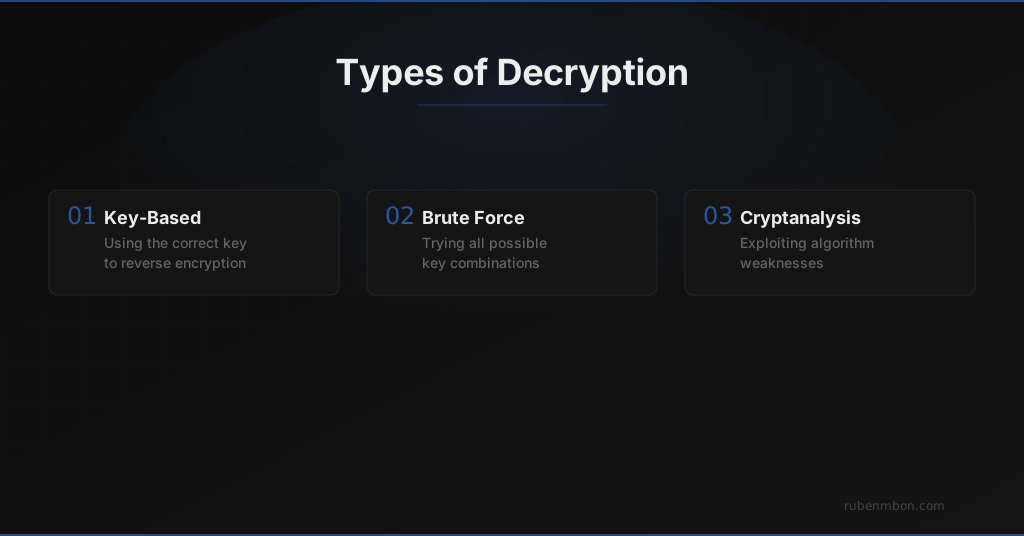 Five Types of Decryption.
Various decryption methods transform encrypted data into its original, unencrypted form. Decryption techniques frequently used include:
-
Decryption with a symmetric key: The same key is used for encryption and decryption. The key, shared by the message’s originator and recipient, must be kept a secret to maintain the communication’s security. Techniques like AES and DES are examples of symmetric key decryption algorithms.
-
Asymmetric key decryption: This method employs two distinct keys—a public key and a private key—for both encryption and decryption. The communication is encrypted using the public key and decrypted using the private key. Because the private key is kept private and not shared with anybody, it is more difficult for unauthorized individuals to decrypt the message with asymmetric key decryption than with symmetric key decryption. Asymmetric key decryption methods such as RSA (Rivest-Shamir-Adleman) and ECC are two examples (Elliptic Curve Cryptography).
-
Password-based decryption: The password must be entered correctly to access the information because it serves as a key to decrypt the data. Decryption based on a password is a typical method for securing sensitive documents and online accounts.
-
Decryption, including key escrow: This method entails keeping a duplicate of the decryption key in a safe place, referred to as an escrow, in case it becomes necessary to decode the data. When the original decryption key is lost or forgotten, key escrow decryption is frequently used to ensure that encrypted data can be accessible in an emergency.
-
Quantum decryption: Data is decrypted using the principles of quantum physics. Although quantum decryption is still experimental and not commonly used, it has the potential to be significantly faster and more secure than current decryption techniques.
Why Use Encryption and Decryption?
 Encryption and Decryption are Fundamental to Data Security.
Encryption and decryption are two fundamental concepts used in data security. Through the encryption process, the encrypted data is converted from plain text into an unreadable form, known as ciphertext. Decrypting a message is the opposite: it takes the ciphertext and returns it to its original readable form.
While these processes seem simple in concept, they are invaluable in protecting sensitive data. For example, if an attacker were to gain access to your encrypted data, they would need the encryption key (or password) to decrypt the information and view it in plain text.
The encryption algorithm and decryption have several benefits, including protecting data from unauthorized access, ensuring privacy, and providing authentication and non-repudiation for digital communications. Here are a few ways encryption and decryption can be used to enhance security:
1. Confidentiality
Encrypting data prevents unauthorized users from reading it without the encryption key. This makes it difficult for attackers to gain access or misuse the data without authorization.
2. Authentication
Encryption allows two parties (sender and recipient) to authenticate each other and verify the source of a message. In some cases, an encryption method can also be used to link an individual with a particular message.
3. Non-repudiation
Encryption prevents one party from denying they sent or received a message, as it’s impossible to deny having an encryption key. Your encryption key is your digital fingerprint.
 Encryption and Decryption Provide Even More Benefits to Data Security.
4. Privacy
By encrypting data, individuals can ensure that their messages remain private and only accessible to the intended recipient. The sender and receiver can also share a secret to secure communication.
5. Access control
Encryption enables organizations to control who has access to their sensitive information and when they can access it. In addition, encryption makes it harder to breach data systems by adding another layer of complexity.
6. Anonymity
Encryption helps protect the privacy of an individual’s identity by masking their personal information from public view. Since it’s difficult to decrypt the data without the encryption key, anonymity is maintained.
7. Compliance
Organizations must often adhere to specific data security and privacy regulations. Encrypting data can help organizations meet these compliance requirements. And, if the data is ever compromised, encryption mitigates the damage and potential losses.
In a world where data breaches are too common, encryption and decryption effectively protect sensitive information from unauthorized access or misuse. Whether you’re an individual looking for privacy or a business needing to comply with data regulations, encryption and decryption can help ensure that your information stays secure.
Frequently Asked Questions
Q: What is the difference between encryption and decryption?
Data is encrypted when it is made into a form that can only be accessed with a decryption key by being jumbled or encoded. Using the decryption key, decryption restores encrypted data to its original state. In cybersecurity, these methods safeguard data and guarantee its confidentiality, integrity, and availability.
Q: Which is better encrypted or decrypted?
Data access and protection in cybersecurity need encryption and decryption, which are both crucial techniques. In contrast to decryption, which restores encrypted material to its original form, encryption scrambles data only to be viewed with a decryption key. Data confidentiality, integrity, and availability must be guaranteed using both processes.
Q: What are encryption and decryption in simple words?
Encryption is like putting a special code on a message so that only certain people can read it. Decryption is like taking the code off so that the message can be read by anyone. Both of these things help keep our information safe and secret.
Q: What is the difference between decryption and decoding?
The process of restoring encrypted data to its original state is known as decryption. Decoding is the process of restoring data’s original form once it has been encoded. Decryption is a tool used in cybersecurity to access and safeguard data. Decoding typically entails converting encoded data back into a usable format.
Conclusion
The main difference between encryption and decryption lies in transforming plain text data into an unreadable format. Encryption involves taking a plain text message or file, applying a mathematical algorithm (known as a cipher) to it, and producing a ciphertext.
Decryption then reverses this algorithm to restore the original plain text message or file. There are several other key differences between these two concepts, such as the type of data they are used for and the complexity of their key algorithms.
Understanding these differences is essential for organizations seeking to protect their data against unauthorized access or misuse.